| Welcome, Guest |
You have to register before you can post on our site.
|

|
|
| One Side Taxi – Best One-Way Cab Service in Maharashtra |
|
Posted by: onesidetaxi - 7 hours ago - Forum: Article
- No Replies
|
 |
One Side Taxi is a trusted and reliable cab service in Mumbai, offering convenient, affordable, and comfortable transportation solutions for individuals, families, and businesses. We specialize in one-way taxi Mumbai services, outstation cab bookings, corporate car rentals, airport transfers, and luxury wedding car rentals. Our goal is to make every journey smooth, safe, and hassle-free with professional drivers and well-maintained vehicles.
Whether you are planning a one-way trip from Mumbai to Pune, Nashik, Surat, Vapi, Ahmedabad, or other destinations across Maharashtra and Gujarat, One Side Taxi provides convenient travel options to suit your requirements. Our one-way cab services are designed for travellers who want a comfortable ride without paying unnecessary return-trip charges.
We also provide reliable taxi services in Mumbai for airport pickups and drops, corporate travel, local sightseeing, city tours, and long-distance journeys. For special occasions, our wedding car rental services offer elegant and comfortable vehicles to make your celebrations more memorable.
At One Side Taxi, we understand that every passenger has different travel needs. That's why we also offer pet-friendly taxi services, allowing you to travel comfortably with your beloved pets. From family vacations and business meetings to airport transfers and outstation trips, we focus on punctuality, customer satisfaction, and dependable transportation.
Our diverse fleet of vehicles ensures that customers can choose suitable travel options based on their group size, destination, and budget. With a dedicated team committed to providing quality service, we aim to deliver a convenient and trustworthy travel experience every time.
Choose One Side Taxi for affordable one-way cab bookings, outstation taxi services, corporate car rentals, airport transfers, and wedding car hire in Mumbai and beyond.
Visit our website:https://www.onesidetaxi.com/
|

|
|
| Quạt Hút Bụi Túi Vải Trong Ngành Sản Xuất Bột Vỏ Trứng |
|
Posted by: phudatvuong - 10 hours ago - Forum: Article
- No Replies
|
|
Quạt Hút Bụi Túi Vải Trong Ngành Sản Xuất Bột Vỏ Trứng: Kiểm Soát Bụi Từ Công Đoạn Nghiền Đến Phân Loại Thành Phẩm
Bột vỏ trứng được sử dụng trong một số lĩnh vực như sản xuất thức ăn chăn nuôi, phân bón và nguyên liệu bổ sung khoáng. Quá trình xử lý vỏ trứng thường trải qua các công đoạn làm sạch, sấy khô, nghiền và sàng phân loại. Trong đó, hoạt động nghiền và vận chuyển nguyên liệu dễ tạo ra bụi mịn phát tán trong nhà xưởng.
Quạt hút bụi túi vải có thể được tích hợp vào hệ thống thu gom bụi tại các vị trí phù hợp. Giải pháp giúp kiểm soát hạt bụi phát sinh, giảm lượng vật liệu bám trên thiết bị và hỗ trợ duy trì môi trường sản xuất ổn định.
Những công đoạn phát sinh bụi khi sản xuất bột vỏ trứng
Vỏ trứng sau thu gom cần được xử lý để loại bỏ tạp chất, làm khô và đưa về kích thước phù hợp với mục đích sử dụng. Đặc điểm nguyên liệu thay đổi theo từng công đoạn, vì vậy nguồn bụi cũng có sự khác biệt.
Bụi phát sinh khi nghiền vỏ trứng
Sau khi làm sạch và sấy khô, vỏ trứng được đưa vào máy nghiền để giảm kích thước. Dưới tác động của lực va đập và ma sát, vật liệu vỡ thành các mảnh nhỏ, sau đó tiếp tục tạo ra hạt mịn.
Khi nguyên liệu được nạp vào máy hoặc xả ra khỏi buồng nghiền, một phần bụi có thể thoát qua cửa cấp liệu và các vị trí liên kết. Nếu máy nghiền hoạt động liên tục, lượng bụi phát tán có thể tích tụ quanh khu vực sản xuất.
Bụi tại công đoạn sàng phân loại
Bột sau nghiền thường được đưa qua sàng để phân chia theo kích thước hạt. Quá trình rung và chuyển động của lưới sàng khiến các hạt nhỏ dễ bị cuốn vào dòng không khí.
Tại cửa nạp, cửa xả và vị trí chuyển tiếp giữa các tầng sàng, bụi có thể phát tán nếu thiết bị không được che kín hoặc thiếu điểm hút cục bộ. Hệ thống thu gom cần được bố trí sao cho không làm ảnh hưởng đến quá trình phân loại kích thước.
Bụi phát sinh khi đóng bao thành phẩm
Bột vỏ trứng sau phân loại được chuyển đến phễu chứa và thiết bị đóng gói. Khi vật liệu rơi vào bao, không khí bên trong bị đẩy ra ngoài và có thể mang theo những hạt bụi mịn.
Nếu miệng bao không được bố trí chụp hút phù hợp, bụi dễ lan ra khu vực cân và đóng gói. Lâu ngày, lớp bột tích tụ trên sàn, băng tải và bề mặt máy móc sẽ làm tăng khối lượng vệ sinh nhà xưởng.
Vì sao cần bố trí hệ thống quạt hút bụi túi vải?
Bụi vỏ trứng chủ yếu có nguồn gốc khoáng, với thành phần giàu canxi cacbonat. Khi vật liệu được nghiền thành hạt nhỏ, bụi có thể phát tán trong không khí và bám lên các bề mặt xung quanh.
Hệ thống hút bụi phù hợp giúp kiểm soát dòng khí chứa hạt bụi tại nguồn. Quạt tạo lực hút và vận chuyển không khí qua đường ống, còn túi vải giữ lại bụi trong thiết bị lọc.
Hạn chế bụi tích tụ quanh máy nghiền
Máy nghiền thường là khu vực có khả năng phát sinh bụi đáng kể do nguyên liệu liên tục chịu tác động cơ học. Bố trí chụp hút tại cửa nạp, cửa xả hoặc vị trí chuyển liệu giúp thu gom bụi trước khi phát tán rộng.
Để đạt hiệu quả, chụp hút cần phù hợp với kết cấu máy và hướng chuyển động của vật liệu. Nếu miệng hút đặt quá xa hoặc không che chắn đúng vị trí, luồng khí có thể không cuốn được bụi phát sinh.
Duy trì môi trường làm việc sạch hơn
Bụi mịn có thể bám lên sàn, thiết bị và khu vực thao tác của công nhân. Khi có tác động từ hoạt động sản xuất hoặc luồng gió trong nhà xưởng, lớp bụi này có thể tiếp tục phát tán.
Hệ thống hút cục bộ giúp giảm lượng bụi thoát ra môi trường xung quanh. Tuy nhiên, giải pháp cần kết hợp với vệ sinh định kỳ và kiểm soát rò rỉ tại các vị trí nối ống, cửa kiểm tra và phễu chứa.
Hỗ trợ thu hồi vật liệu trong quá trình sản xuất
Một phần bụi được thu gom có thể là vật liệu phát sinh từ chính nguyên liệu đầu vào. Việc tập trung bụi trong thiết bị lọc giúp doanh nghiệp kiểm soát lượng vật liệu thu được và thuận tiện hơn khi xử lý.
Khả năng tái sử dụng bụi cần được đánh giá riêng dựa trên độ sạch, kích thước hạt và yêu cầu chất lượng của thành phẩm. Bụi lẫn tạp chất hoặc không đáp ứng tiêu chuẩn sản xuất cần được phân loại và xử lý theo quy trình phù hợp.
Xem thêm: Quạt Hút Bụi Túi Vải Trong Ngành Sản Xuất Hạt Nhựa Màu Masterbatch: Kiểm Soát Bụi Tại Công Đoạn Cân, Phối Trộn Và Cấp Liệu
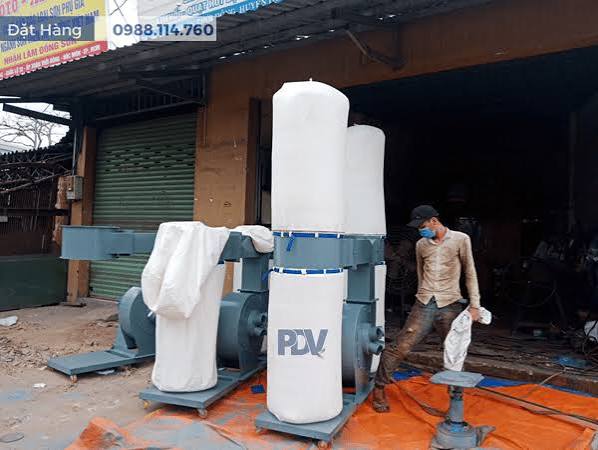 Không phải mọi vị trí phát sinh bụi đều cần cùng một lưu lượng hút. Doanh nghiệp cần xác định đặc điểm từng nguồn bụi, điều kiện lắp đặt và chế độ vận hành trước khi lựa chọn quạt cùng thiết bị lọc.
Vỏ trứng sau làm sạch có thể còn độ ẩm nếu công đoạn sấy chưa đạt yêu cầu. Khi nguyên liệu ẩm đi vào hệ thống, bụi có nguy cơ kết tụ và bám lên bề mặt túi lọc.
Tình trạng bám dính kéo dài làm giảm diện tích lọc hữu ích và tăng trở lực dòng khí. Vì vậy, cần kiểm soát độ ẩm của nguyên liệu, nhiệt độ dòng khí và điều kiện vận hành trước khi đưa khí chứa bụi vào thiết bị lọc.
Xác định lưu lượng hút tại từng vị trí
Lưu lượng cần được tính toán theo kích thước chụp hút, mức độ phát tán và số lượng điểm hút hoạt động đồng thời. Khu vực nghiền, sàng và đóng bao có đặc điểm phát sinh bụi khác nhau nên cần phương án thu gom riêng.
Nếu lưu lượng quá thấp, bụi có thể thoát khỏi vùng chụp hút. Ngược lại, lưu lượng quá lớn có thể làm tăng tiêu thụ điện và cuốn theo lượng vật liệu không cần thiết.
Đối với hệ thống có nhiều nhánh, cần tính toán tổn thất áp suất trên từng tuyến ống. Van điều chỉnh giúp cân bằng lưu lượng giữa các điểm hút, hạn chế tình trạng một nhánh hoạt động mạnh trong khi nhánh khác không đạt yêu cầu.
Lựa chọn vật liệu túi lọc và cơ chế làm sạch
Vật liệu túi lọc cần phù hợp với kích thước hạt bụi, nhiệt độ, độ ẩm và tính chất dòng khí. Đối với bụi khoáng mịn, cần xem xét khả năng giữ bụi, độ bền cơ học và mức độ tương thích của vật liệu lọc.
Cơ chế giũ bụi cũng ảnh hưởng đến hiệu suất vận hành. Nếu bụi bám dày mà không được làm sạch đúng cách, chênh lệch áp suất sẽ tăng và lưu lượng hút có thể suy giảm.
Doanh nghiệp nên lựa chọn thiết bị có kết cấu thuận tiện cho kiểm tra, thay thế túi lọc và thu gom bụi. Khả năng bảo trì dễ dàng giúp hạn chế thời gian dừng máy ngoài kế hoạch.
Các yếu tố cần chú ý trong quá trình vận hành
Sau khi lắp đặt, hệ thống cần được theo dõi thường xuyên để phát hiện sớm những thay đổi về lưu lượng, áp suất và tình trạng thiết bị. Công tác kiểm tra nên gắn với lịch bảo dưỡng của toàn bộ dây chuyền nghiền và phân loại.
Kiểm soát bụi lọt qua đường ống
Đường ống dẫn khí cần được kiểm tra tại các mối nối, co cút và vị trí liên kết với máy nghiền. Khi xuất hiện khe hở, hệ thống có thể bị thất thoát áp suất và giảm khả năng hút tại nguồn.
Ngoài ra, bụi có thể lắng đọng trong những đoạn ống vận chuyển không đạt vận tốc phù hợp. Cần kiểm tra các vị trí dễ tích tụ để làm sạch, tránh tình trạng thu hẹp tiết diện dòng khí.
Theo dõi tình trạng túi lọc
Túi lọc cần được kiểm tra định kỳ để phát hiện rách, thủng hoặc bám bụi bất thường. Nếu túi bị hư hỏng, bụi có thể đi qua thiết bị và xuất hiện tại đường khí sau lọc.
Chênh lệch áp suất trước và sau thiết bị lọc là thông số hữu ích để đánh giá tình trạng vận hành. Khi chỉ số thay đổi bất thường, cần kiểm tra đồng thời túi lọc, cơ cấu giũ bụi và đường dẫn khí thay vì chỉ điều chỉnh tốc độ quạt.
Kiểm soát bụi trong khu vực chứa và đóng gói
Bụi sau thu gom cần được xả ra khỏi phễu chứa theo quy trình phù hợp. Nếu cửa xả không kín hoặc thao tác tháo bụi thiếu kiểm soát, vật liệu có thể phát tán trở lại môi trường.
Khu vực đóng bao cũng cần duy trì chụp hút gần miệng nạp. Bao bì, phễu cấp liệu và vị trí cân cần được vệ sinh để hạn chế bụi tồn dư ảnh hưởng đến chất lượng thành phẩm.
Quạt Phú Đạt Vượng đồng hành cùng hệ thống hút bụi nhà xưởng
Đối với dây chuyền sản xuất bột vỏ trứng, hiệu quả thu gom bụi phụ thuộc vào sự phối hợp giữa quạt, đường ống, chụp hút và thiết bị lọc. Doanh nghiệp cần lựa chọn cấu hình dựa trên lưu lượng yêu cầu, áp suất trở lực và đặc điểm nguyên liệu tại từng công đoạn.
Quạt Phú Đạt Vượng cung cấp các dòng quạt công nghiệp phục vụ hệ thống hút bụi cho nhà máy và khu sản xuất. Khi xây dựng phương án, doanh nghiệp nên khảo sát nguồn phát sinh bụi, điều kiện lắp đặt và chế độ vận hành để lựa chọn thiết bị phù hợp. Một hệ thống được tính toán đồng bộ sẽ hỗ trợ kiểm soát bụi ổn định, giảm thất thoát nguyên liệu và tạo điều kiện thuận lợi cho công tác vệ sinh, bảo trì.
|
|
|
|
| Suonon Donete 50K 2026 – Buy & Explore Top Suonon Vape |
|
Posted by: yaralennon29 - Yesterday, 11:51 PM - Forum: Article
- No Replies
|
|
Choosing a reliable device involves looking past the marketing noise and focusing on practical specifications. The modern market offers various options for consumers seeking long-lasting performance, efficient battery technology, and consistent flavor delivery. Understanding what goes into these hardware builds helps users make informed purchasing decisions.
Understanding the Evolution of Modern Disposable Hardware
The vaping industry has shifted away from small, short-lived units toward high-capacity systems. Modern engineering now allows manufacturers to pack substantial e-liquid reservoirs and rechargeable power cells into compact bodies. When exploring a Suonon vape device, users typically encounter features designed to maximize operational lifespan without sacrificing vapor quality. - Increased liquid capacity up to 20 mL
- Integrated Type-C charging ports for rapid power replenishment
- Multi-mode power settings to adjust vapor density
- Dual mesh coil configurations to prevent premature burnout
The Role of Dual Mesh Coils in Flavor Consistency
Early disposable options often suffered from declining flavor quality as the internal battery degraded or the wick dried out. Contemporary designs address this challenge by utilizing dual mesh heating elements. By alternating the electrical load across two distinct coils, the heat is distributed more evenly. This technical approach ensures that the profile remains stable from the initial pull to the final drops of liquid.
Selecting the right hardware depends heavily on individual usage patterns, flavor preferences, and convenience requirements. High-capacity models like the Suonon Donete 50K offer extended usability for consumers who prefer fewer replacements. - Even thermal distribution across the cotton wick
- Reduced risk of dry hits during extended use
- Extended component lifespan under regular operating conditions
Battery Capacities and Power Management Systems
A large liquid reservoir requires a reliable power source to match its output. Most high-puff devices incorporate rechargeable lithium-ion cells ranging from 800mAh to 1000mAh. Users can plug their devices into standard USB Type-C chargers to replenish the battery in roughly an hour. Smart power management chips also regulate voltage output, preventing harsh throat hits as the battery level drops.- Integrated 900mAh cells balancing size and longevity
- USB-C pass-through or fast-charging compatibility
- LED indicator screens displaying live battery metrics
Evaluating Airflow and Customization Options
Airflow regulation plays a critical role in tailoring the draw resistance to personal preference. Adjustable intake slots located at the base of the chassis allow users to tighten or loosen the draw. Additionally, devices featuring multiple operating modes—such as standard output for maximum efficiency or high-output modes for denser vapor—give users direct control over their daily experience.- External ring adjustments for customized intake volume
- Selectable performance modes tailored for longevity or density
- Automatic draw activation eliminating physical buttons
Safety Standards and Quality Control Measures
With the proliferation of imported hardware, verifying authenticity has become essential for consumer safety. Authentic units ship with scratch-off verification codes that cross-reference against manufacturer databases. Furthermore, reputable distribution channels ensure that internal components adhere to electrical safety standards, reducing risks associated with unverified lithium-ion cells.- Anti-counterfeit scratch codes on retail packaging
- Rigid PC and PCTG outer shell construction
- Compliance with standard regional nicotine salt concentrations
Conclusion
Whether you are browsing online stock or trying to locate a local retailer offering Suonon Vapes Near Me, always prioritize verified packaging, clear ingredient disclosures, and proper age-verification protocols to ensure a safe experience.
|
|
|
|
| How to Build an Online Handyman Services Marketplace in 2027 |
|
Posted by: laradavies - Yesterday, 08:34 PM - Forum: Article
- No Replies
|
|
Think about the last time something broke at home. A leaking tap, a dead socket, an AC that gave up in the middle of summer. Most of us ask a neighbor, scroll through a few listings, make some calls and hope the person actually turns up.
That mess is exactly the gap a handyman marketplace tries to fill. One place to find someone, book them and pay. So how do you actually start one? Here's how I'd go about it.
1. Decide How Your Marketplace Will Make Money
Before anything gets built, figure out where the income comes from. There are three common ways, and you don't have to lock yourself into one forever.
Commission on bookings
Customers book through your platform and you keep a percentage of every completed job. It's the popular choice because you only earn when work actually happens.
Provider subscriptions
Providers pay a monthly or yearly fee to be listed, get enquiries and manage their profile. The income is steadier, but you'll need enough customer demand to make the fee worth paying.
Paid leads
A customer posts what they need fixed, and professionals pay to see the request or respond to it. Simple to understand, though providers can get annoyed if the leads don't turn into jobs.
Plenty of marketplaces start with one model and add another once things are running.
2. Pick the Services You'll Start With
Don't try to cover every home repair job from day one. Choose a few you can do well. Plumbing, electrical work, AC servicing, furniture assembly and painting are good places to begin. Appliance repair and cleaning can come later.
A short list is easier to fill with reliable people, and it's a lot easier to market too.
3. Build the Features Each Side Needs
A handyman marketplace is more than a nice-looking website. Three groups use it, and each one needs different things.
For customers
They want to search or browse by category, look at provider profiles and reviews, book a time slot, ask for a custom quote, pay online and see where their booking stands.
For service providers
They need to sign up and build a profile, see incoming job requests, accept or turn them down, manage their availability and keep track of what they've earned.
For you as the admin
You need to manage customers and providers, set up service categories, control commission rates, keep an eye on payments and bookings, and pull basic reports so you know what's working.
Mobile apps are worth planning for early. Most providers will check jobs on their phone while they're out working, not from a laptop.
4. Build From Scratch or Use Ready-Made Software?
Building from scratch gives you complete control, but it takes more time, money and technical help than most people expect.
The other route is ready-made software. Best Freelancer Script is one example. It offers a white-label handyman marketplace in the TaskRabbit or Handy style, with customer and provider apps, a website with web booking, an admin dashboard, commission management, several payment options and full source code ownership. It works for all three business models above too.
If you want to have a look, it's here: https://www.bestfreelancerscript.com/han...e-software. Whatever you pick, compare it with a couple of other options before you commit.
5. Work on Trust From the Start
Nobody wants a stranger in their house unless they feel safe about it, so trust can make or break a home services business. Verify your providers, show real ratings and reviews, keep pricing clear and have a proper way to handle disputes.
Something will go wrong at some point. It's far better to have a plan before it does. Get this right and people come back to book again.
6. Start in One Place, Then Grow
Please don't launch in five cities at once. You'll struggle to find providers and struggle even more to find customers.
Pick one city or one area. Find a small group of dependable professionals, get your first customers, listen to what annoys them and fix it. Once that's working, add new areas and more services.
Final Thoughts
A handyman marketplace can be a good business for someone who understands what local customers actually need. But an app or a website won't do the job on its own. You still need dependable providers, a booking process that doesn't frustrate people, a revenue model that makes sense and a plan for finding customers.
Custom build or ready-made, work out your business model and must-have features before you spend money on development.
|
|
|
|
|

